



Table of Contents
- Introduction
- Why Getting Your First Client Changes Everything
- What Skills You Need in 2026
- The Simple Client Acquisition Flow
- Drop the “Perfect Preparation” Trap
- Research: Spot Real Business Problems
- Personalize: Communicate Like a Human
- Provide Value: Help First, Sell Later
- Build Trust Before You Close
- How to Close Without Being Pushy
- Simple Outreach Strategy That Works
- Common Beginner Mistakes
- Real Example: From Zero to First Client
- The Psychology Behind Client Conversion
- Daily Action Plan for Beginners
- Final Thoughts
- FAQs
Introduction
The distance between Zero to the First Client in 2026 is daunting to most novice marketers. You study SEO, advertisements, content, and analytics. So far, it seems like a long way to the first paying customer.
In 2026, enterprises are not concerned about certificates. They are concerned with transparency, development and performance. Competition is fierce, AI technologies are omnipresent and customers want quantifiable results, not hard work.
In case you would like to get a better grasp of the concepts discussed, you may consider enhancing your skills with the help of a hands-on digital marketing courses in pune that would be applicable in practice.
This guide provides you with a step-by-step digital marketing roadmap to follow as a beginner that is practical and not full of fluff or promises. Nothing more than ordinary deeds day by day.
Why Getting Your First Client Changes Everything
It is not only income: it is validation; this is your first client.
It builds:
- Belief in your performance.
- Insight into marketing in the real world.
- Portfolio proof
- Authority in your niche
- Testimonials and referrals
As soon as you perform some results with one client, it starts. The second client is easier to get since promises are replaced by proof.
Most novices remain trapped in learning mode. However, at the point that you deal with real businesses, growth begins.
What Skills You Need in 2026
In 2026 digital marketing is incorporated. Clients demand expansion – not platform management.
The essential skills required are here:
Performance Marketing
- Running Meta and Google Ads
- Cost per lead (CPL) knowledge.
- Conversion tracking
SEO & AI Search Optimization
- On-page SEO
- Technical basics
- AI search visibility
Content & Copywriting
- Composing catchy headings.
- Crafting landing page copy
- Enhancing the call-to-actions (CTAs).
Analytics & Reporting
- Tracking ROI
- Knowing the behavior of the user.
- Reporting clearly
Automation & AI Tools
- Workflow automation
- AI-assisted content
- Lead nurturing systems
You don’t need mastery in all. But you are to bring results.
The Simple Client Acquisition Flow
This pattern may be followed by the majority of successful beginners:
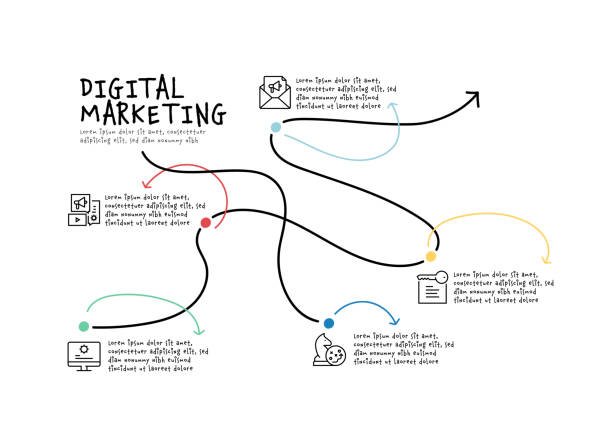
Research – Personalize – Provide Value – Build Trust – Close.
It’s not complicated. But uniformity gives it strength.
Drop the “Perfect Preparation” Trap
Most novices procrastinate outreach due to the feeling of being unprepared.
Here’s the truth:
Action precedes confidence and not vice versa.
Clients do not want flawlessness. They expect understanding. When you know their business issue, you have already been ahead of most amateurs.
Research: Spot Real Business Problems
Ahead of sending a message to anyone, look.
Pick one niche:
- Gyms
- Real estate agents
- Restaurants
- Coaches
- Local stores
- Personal brands
Now analyze:
- Social media consistency
- Engagement levels
- Website speed
- SEO presence
- Ad creatives
- Clear CTAs
Look for one real problem.
Businesses listen when you point out a certain problem.
Personalize: Communicate Like a Human
Avoid generic templates.
Instead of:
“Hi, I am a digital marketer. I can grow your business.”
Say:
I saw you have reels being steady, though you are not engaged. Perhaps, the hook might be more profound.
Particular effort receives a focus.
Individualization has a tremendous level of response rate in comparison to mass mailing.
Provide Value: Help First, Sell Later
It is at this point that dialogues start.
Offer one small improvement:
- Improve bio clarity
- Add retargeting ads
- Fix landing page speed
- Improve creatives
- Optimize SEO headings
- Don’t overwhelm them.
Helping builds curiosity. Discussion gathers interest.
Build Trust Before You Close
Clients don’t buy services.
They buy belief.
Trust builds when:
- You explain simply
- You don’t exaggerate
- You share mini audits
- You are an expressive person.
- You stay honest
Even small proof works.
How to Close Without Being Pushy
Closing is giving a follow up – not pressure.
Entry-level closure choices:
- Free audit
- Free consultation
- Small paid trial
- Short-term campaign
Example:
I can go through your account and make some recommendations to you.
Simple. Natural. Confident.
Simple Outreach Strategy That Works
The following is a pragmatic outreach program:
- Send 15-20 individual messages a day.
- Follow up after 3-5 days
- Track responses in a sheet
- Improve your pitch weekly
- Post content 3-4 times per week
- Unity overpowers intensity.
Common Beginner Mistakes
Knowing Too Much, Doing Too Little.
It is productive to watch tutorials. Execution creates results.
No Niche Clarity
The attempt to satisfy everybody dilutes positioning.
Inconsistent Outreach
When effort is not steady momentum is lost.
Focusing on Tools
Clients are concerned about development – not software.
Overselling
Trust is diminished by aggressive selling.
Real Example: From Zero to First Client
This was the routine of a beginner:
Built 3 demo projects
Published on LinkedIn every day in the first 30 days.
Dispatched 20 tailored messages daily.
Result:
First client in 18 days
Started with small project
Converted into monthly retainer.
The initial customer generated velocity. Confidence improved. Referrals followed.
The Psychology Behind Client Conversion
Selling feels pushy.
Helping feels trustworthy.
But when you mean well and this is clear, then your opponent decreases.
This is congruent with what Seth Godin writes:
Finding customers to your products, find products to your customers. — Seth Godin
It is no longer about selling but the transformation into solving.
Daily Action Plan for Beginners
An example of a daily routine would be:
- Research 10 businesses
- Identify 1 problem each
- Send 15-20 personalized messages
- Improve one skill daily
- Share one useful content.
- Track conversations
- Follow up consistently
Visibility – Discussions – Clients.
EEAT: Authority Building as an Amateur.
To strengthen trust:
- Share case studies (including demo ones).
- Display pre-and post-screen shots.
- Publish insights regularly
- Gather testimonials (even of free work)
- Document your journey
- Claims cannot create authority as swiftly as real proof.
Final Thoughts
It is not a magic ride on the way to Zero to First Client in 2026.
It consists of just simple steps that are repeated every day.
You don’t need:
- Perfect skills
- Perfect confidence
- Perfect preparation
You need:
- Clear intention
- Daily action
- Consistency
- Patience
There is a client as a starting point of momentum.
As Steve Jobs said:
The only way to work great is to love doing it.
Be it in the case of searching a digital marketing course in thane or comparing digital marketing classes in pune, you can always make sure that you choose an affordable digital marketing course in pcmc without necessarily stretching your pocket.
Frequently Asked Questions
1. Are certifications necessary among beginners?
A. Not mandatory. Clients are biased towards results and execution capacity.
2. Is it better to begin freelancing or with a job?
A. Both work. Freelancing provides better exposure to the clients.
3. What are the number of skills required to start?
A. There is no need to have more than basic knowledge of ads, content, and analytics.
4. What is the time taken to get the first client?
A. Unless there is a constant outreach, most beginners can get their first client in 2-6 weeks.
5. What if clients don’t reply?
A. Improve personalization. Follow up politely. Refine your offer.

Author: Prashant Kadukar, Founder & CEO, Digital Trainee
Bio: The founder and director of Digital Trainee, Mr. Prashant Kadukar has been an inspiration owing to his laurels all along. An MIT alumni, he happens to be a Google Ads & Bing Certified Professional. His decade long mastery in strategizing, designing, and implementing Digital Marketing plans and campaigns is well known. Mr. Prashant’s portfolio consists of serving 100+ Domestic and International clients, and consulting numerous startups on aspects such as strategy and growth. The workshops conducted by him have been insightful to an extent where the majority of the attendees have chosen a career in this field. Such has been the impact!