




Running a business often means dealing with timing gaps between income and expenses. Even profitable companies can experience periods where outgoing costs arrive before incoming payments. Payroll, supplier invoices, rent and tax obligations rarely wait for customer payments to clear.
In these situations, many business owners look for funding options that can be arranged quickly without tying up property or other assets. One common option is an unsecured business loan in Australia.
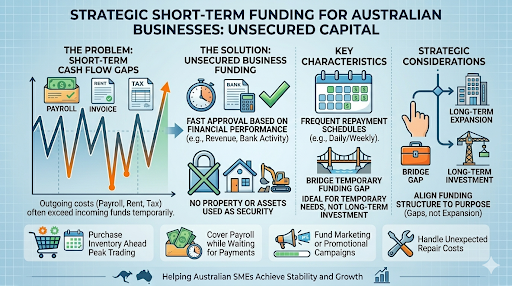
Unlike asset-backed funding, unsecured finance is approved primarily based on a company’s financial activity. Lenders typically assess recent bank statements, revenue consistency and overall business conduct rather than requiring property or equipment as security. This can make the process faster for businesses that need access to working capital quickly.
However, speed should not be the only factor considered when evaluating funding.
When Unsecured Funding Can Be Useful
Unsecured facilities are often used for short-term financial needs. They may help businesses manage temporary cash flow gaps or respond quickly to opportunities.
Examples include:
- purchasing additional inventory during busy periods
- covering payroll while waiting for client payments
- funding marketing or promotional campaigns
- handling unexpected repair or maintenance costs
Because these facilities usually involve shorter terms than secured loans, they can work well when the funding requirement is temporary rather than long-term.
Understand Repayment Structures
One of the most important considerations when taking unsecured funding is the repayment schedule. Many facilities are structured with weekly or daily repayments.
This structure can work well for businesses with consistent cash flow. However, companies with irregular revenue patterns should carefully review how repayments align with their income cycle.
A repayment schedule that looks manageable on paper can become challenging if revenue fluctuates.
Preparing Before Applying
Before applying for funding, it can be helpful to review the financial signals lenders typically examine.
These often include:
- recent bank statement conduct
- existing loan commitments
- business revenue consistency
- time in operation
Improving financial stability in the months before applying can strengthen the likelihood of approval.
For example, maintaining consistent account balances and avoiding overdrafts may positively influence how lenders assess risk.
Choosing the Right Structure
Unsecured funding can provide valuable flexibility, but it is not the best solution for every situation.
Businesses planning long-term investments, such as purchasing equipment or expanding premises, may find that longer-term funding structures are more suitable.
The key is matching the funding structure to the purpose of the loan.
Summary
Access to capital is an important part of running and growing a business. The most effective funding decisions occur when business owners clearly understand how different finance options operate.
Before choosing any funding solution, it is worth reviewing how repayments will affect day-to-day cash flow and whether the facility aligns with the company’s broader financial strategy.
At Lend Brokers, we help Australian businesses explore suitable funding options based on their individual circumstances. Taking time to assess the structure carefully can help ensure funding supports growth rather than creating unnecessary financial pressure.